It's been some time since I posted a "Business of Diabetes" update, so today's post is probably overdue. Today's subject is particularly timely since Dr. Errol De Souza, President and CEO of Biodel, Inc., presented this morning (see the presentation deck HERE) at 8:30 AM EST at the 6th Annual JMP Securities Healthcare Conference at the St. Regis Hotel in New York. My experience has proven that a fair number of presentations made at similar investor "events" like these can quite repetitive (for example, if a company presented a month earlier for another investment bank, whether its Morgan Stanley, Goldman Sachs, JPMorgan, Sanford Bernstein, Credit Suisse, Jeffries or any of the others), many presenters are already very well-rehearsed and prepared for questions. This means that often, they may simply re-present the same content, making the Q&A that follows their actual presentations the main point of differentiation (sometimes you can listen to these online, but not always). Still, I always try to review the content from these events when time permits because there may be occasional nuggets of interesting information that are shared. However, we can expect more detail from rivals including Halozyme Therapeutics made tomorrow at the same event.
Truth be told, I already reviewed this morning's JMP Securities Healthcare Conference presentation, and there really wasn't much in the way of new news that wasn't already in the public domain, but my readers may not be aware of where things stand, so if you're interested, you can view the webcast for about the next month by visiting Biodel's investor relations site HERE. I will address the most salient points that people with diabetes may want to know about in this post.
Taking a quick step back, my readers may recall my POST from early 2010 in which I addressed a number of startups eager to stake a claim in the multi-billion dollar insulin market (notably, rapid-acting "prandial" insulins is now approaching $5 billion per year, so there's VERY big money involved). A fair number of the startups I wrote about experienced delays (all for different reasons), one of which was Biodel, Inc.'s Linjeta™ [formerly known as VIAject] which is the subject of today's post and was the first to seek regulatory approval. The other was MannKind's Afrezza® which I will not really address in today's post. Both experienced some delays with the agency many (most?) of us love to hate (although a few of us dislike them for entirely different reasons!): the U.S. FatalFood and Drug Administration.
However, in both of the aforementioned cases, I think it's safe to say that the delays were pretty much the fault of the companies that were seeking product approvals (see HERE for my update on Linjeta). When former FDA Chief Andrew von Eschenbach ran the agency, I don't believe either would have been delayed, but his leadership (thankfully) is history now. Under Andrew von Eschenbach's leadership, the FDA's staff was instructed that the FDA should not be viewed as an agency to protect the public health per se, but an agency to serve the needs of the industries the agency regulated (especially since most of the funding for the FDA now comes from user fees paid for by the drug, biotech and medical device industries except in the case of generics, which are incredibly backlogged) and that the FDA should be working to address the needs of these "clients". While that was good for pharma, and user fees did fund a lot of FDA staffing, the biggest beneficiaries of those fees were pharmaceutical/biotech/med device companies, although few lawmakers seem to agree this means the FDA is on pharma's payroll even though they pretty much are. Fortunately, under the leadership of Margaret Hamburg, the agency is returning to its mission of actually trying to protect the public health. While many complain the FDA has moved too far on the side of caution, especially in comparison to other regulatory agencies around the world such as the European Medicines Agency, I'll reserve judgement on that when I have the benefit of hindsight! Let's just be glad we don't have evidence of recent approvals for truly dangerous drugs like Vioxx or Avandia (so far, anyway) that were approved while Dr. von Eshenbach was still on the FDA's payroll.
Still, more than a year has passed since I wrote my original post on startups in the insulin field, and I think its time for an update on at least one of them since details are finally in the public domain. So today, I'll cover the product that applied for FDA approval first: Biodel's rapid-acting Linjeta insulin formulation.
Where Things Stand Today
On Tuesday, August 16, 2011, the insulin startup Biodel, Inc. presented (see HERE for the presentation) at the Wedbush Securities' 2011 Life Sciences Conference in New York. Although I did not attend, the presentations themselves usually appear on each of the presenters' investor relations department (at least for those companies that are publicly-held) shortly after these events take place, so I try to read through these for clues on where things stand. Typically, more is revealed there than will EVER come from the FDA itself (another practice which I'd like to see change to look a bit more like Europe, but I digress ...).
My experience has proven that a fair number of presentations made at similar investor "events" like these can quite repetitive (for example, if a company presented a month earlier for another investment bank, whether its Morgan Stanley, Goldman Sachs, JPMorgan, Sanford Bernstein, Credit Suisse, Jeffries or any of the others), many presenters are already very well-rehearsed and prepared for questions. This means that often, they may simply re-present the same exact content, making the Q&A that follows their actual presentations the main point of differentiation (sometimes you can listen to these online, but not always). Still, I always try to review the content from these events when time permits because there may be occasional nuggets of interesting information that are shared. I actually found quite a bit of information about Biodel, Inc., so today, I'm sharing a few of those take-aways as an update.
For Biodel, since the FDA move to delay its decision on Linjeta™ earlier this year, the news has been quiet as the company addresses the FDA concerns and prepares for worldwide commercialization. I should note that Biodel's rapid-acting insulin formulation, unlike ALL other competitors on the market today, is NOT a genetically-modifed, man-invented insulin-like molecule that is commonly referred to as an insulin analogue, but regular biosynthetic human insulin which has been made faster than today's analogues thanks to some proprietary technologies (in theory, the same technology could also be applied to old-fashioned highly-purified insulin formulations sourced from abbatoir animals rather than using agars derived from abbatoir animals used in making biosynthetic human insulin and its analogues, thereby making them faster than today's analogues if the company ever chose to offer such a thing -- unlikely, but the point is that the technology makes even old-fashioned insulin varieties work a LOT faster).
Of course, Linjeta is reportedly only slightly faster (we're talking a few minutes faster here: Linjeta starts to work in about 8-18 minutes (8-13 minutes for the formulation used in the company's new drug application with the FDA) compared to about 25 minutes for most of today's rapid-acting analogues, and about 45 minutes to an hour for regular insulin. Whether that's enough to convince insurance companies to pay for it remains to be seen, but Linjeta differs because the way it accomplishes this is not be altering the insulin molecule itself via genetically modification, although as Close Concerns once said, "in this business, time is money". I have long suspected the company viewed Linjeta as an interim product that could be marketed very soon, but sees the real opportunity to get insurance coverage for their product by making today's analogues slightly faster using their technology, which is patent-protected making Biodel itself potential acquisition bait for a big pharma company like Lilly, Novo or Sanofi. At least one analyst has already gone on record as saying Sanofi is a likely buyer because even though its Apidra rapid-acting analogue still enjoys several more years of patent protection relative to Humalog and Novolog, what insurance company will pay a premium for it when generic versions of the other product are expected to become widely available? This means aquiring Biodel may protect its products (and give them some technology for Lantus as well ... see HERE. The other firm he discusses is Halozyme, but that company is slightly behind Biodel from a development standpoint. He has a valid point.
About Biodel and Linjeta™: How It Works Differently From Today's Analogues
Biodel makes regular insulin faster than today's analogues by removing zinc ions via EDTA, which destabilizes the hexamer of insulin; then by adding citric acid (you know, the stuff found in many powdered lemonade formulations which makes them taste "tart") which also happens to masks surface charges on insulin monomers, which in term prevents re-aggregation and facilitates more rapid absorption into the bloodstream (wow, that's a run-on sentence, but I make no apology for it!). EDTA stands for ethylenediaminetetraacetic acid (which is a real mouthful, hence the acronym is more widely used), and its a compound of amino carboxylic acids that's water-soluble. It is used in various drug and biotech medicine manufacturing to bind to metal ions in order to remove these metal ions from various drug formulations which contain them -- I guess one could liken this to a magnetic substance that removes the traces of zinc from the the insulin protein (note: its not really magnetic, but I thought the analogy made sense in this case).
Note that zinc has long been associated with insulin. In fact, before the days of geneticially-modified insulin analogue formulations such as Lantus and Levemir, zinc was widely used as an additive to delay regular insulin's action in Lente (meaning Lente and Ultralente) formulations, hence Lente is known generically as "insulin zinc suspsension", but even in non-Lente formulations (particularly in regular insulin, as well as in virtually all analogues), tiny zinc ions remain. These ions are one reason it takes regular insulin so long to be absorbed into the bloodstream.
Technology issues aside, the company (Biodel, Inc.) is now completing a small, additional study in order to resubmit Linjeta for FDA approval. I would describe as follows: to compensate for their botched human clinical trial in India which was supposed to save the company lots of money, but the actual cost savings were nothing more than a mirage, and they would probably would have been better off just doing the entire clinical trials in the U.S., Canada and Europe, but I digress. Of course, this company (as well as the established players) bitch and moan that using regular insulin means it's tough to recruit participants in their rapid-acting insulin trials and are trying to convince the FDA that future trials should be against rapid-acting insulin analogues like Humalog/Novolog/Apidra. I don't agree about that is appropriate, but they are lobbying hard to make that the case, and in Biodel's case, for the newer, fix-up version they're now trialling, they've already proved Linjeta is comparable to regular with the first trial, hence the fix-up trial is a quickie that can be done against Humalog instead of regular because they've already established it's comparable to regular, hence fix-up trial was able to recruit faster against Humalog. Slippery slope? You be the judge on that.
While that's gone on, the company also hired a new CEO named Errol De Souza who I noted above was giving this morning's JMP Securities Healthcare Conference presenation (Solomon "Sol" Steiner who was the CEO since the company's inception in 2003 was Chief Scientific Officer for a period, but he retied late last year and is still on their scientific advisory board ... FYI, Dr. Steiner previously worked for another startup company that was once known as MiniMed, Inc. if that tells you anything, and Dr. Steiner also remains on Biodel's Board of Directors). In addition to Biodel's lead product candidate Linjeta, they also have not one but TWO long-acting insulin formulations, one being an extended version of Lantus, and the other is perhaps more compelling (in my opinion) since it enables adjustment of just how long the basal insulin product will actually work, because not all patients need or want 24 hours of basal coverage, nor do they want a pump device attached to them at all times (or they simply cannot afford such a device). Although Novo Nordisk's Levemir is a competent 8-10 hour insulin formulation, most doctors view it as less appropriate for many patients with diabetes than Sanofi's blockbuster Lantus unless the patient needs less than the typical 18 hours of basal coverage offered by Lantus (few believe either lasts 24 hours as both are advertised to) even though the basal needs vary widely from patient-to-patient.
The primary patent for Lantus expired in 2010, although various other patents will remain in place until 2014 (which is right around the corner in pharma-speak), plus Biodel also has a "stablilized" glucagon analogue now in development (one which would not need to be reconstituted prior to use). While it might not be available soon enough to compete with Enject's GlucaPen [http://www.enject.com/] for hypoglycemic emergencies (that's not yet approved, either, but since it is a device for delivery of an already-approved drug, the FDA review and approval process is likely to be faster ... knock on wood!), and if it gains approval, it could be used for that as well as in a bi-hormonal pump which have been studied in a few clinical trials and have provided patients with superior glycemic management and added security).
So where do things stand with Linjeta Today?
1) Tweak the Formula of Linjeta to Ensure Injection Site Discomfort Matches Competitors
First, Biodel is making some slight changes to Linjeta which company management believes will help it's finished product sell better. To quote this morning's presentation: "It is prudent to incur the marginal cost and time delay to move forward with a new formulation(s) to optimize the product's label." Specifically, a fair number of patients in the clinical trials for Linjeta complained of an annoying "stinging" or "burning" sensation following an injection of Linjeta, and that incidence was higher than with existing insulin analogues. While the stinging was not sufficient to deter continued use of Linjeta in the trial, the company believes it is nevertheless prudent to incur the cost and time delay the ultimate introduction slightly in order to move forward with a slightly modified new formulation(s).
Specifically, the pH of Linjeta used in clinical trials was around 4; most other insulin analogues are closer to zero, so the new formulations will have a "neutral" pH, which the company has data showing will reduce injection site discomfort. What's behind the injection site discomfort? The company believes it is caused by the EDTA used to remove the zinc ions, so the company is now undergoing trials with either calcium disodium EDTA or disodium EDTA + calcium, which it believes reduces injection site discomfort, as both had significantly reduced injection site discomfort in other studies.
In other words, the company wants the launch version of Linjeta they plan to market to be fully comparable to the alternatives as far as injection site discomfort. These changes have delayed the finished product from going to market slightly, but are likely in the best interests of becoming a true competitor in the field. Also, the delay is marginal, because it can be class 2 resubmission, which the company expects will result in a 6-month review time, and is already being reviewed by the FDA now.
2) Trials To Position Linjeta Against Humalog and In Insulin Pumps
Beyond that, Biodel has also undergone some additional clinical trials against Humalog (insulin lispro rDNA origin) and also in insulin pumps, so the product will be ready to market in all scenarios current competiton can. In other words, if trials against Humalog work as anticipated, then Linjeta can advertise that it works better than a key analogue competitor, and the pump trials will enable Biodel salespeople to promote its use in pumps (rather than an off-label use as many analogues were promoted initially; in recent years the FDA has cracked down on off-label promotions for drugs). Neither is a big deal, since doctors can prescribe most drugs for uses that are not specifically approved, but having these studies will enable Biodel salespeople to promote this insulin in a manner that is consistent with this insulin's label. Personally, I don't see this one as really necessary because every endocrinologist I've ever seen prescribed insulin analogues "off-label" (meaning before they had approval for use in insulin pumps), and I would not expect anything different with Linjeta, but they're doing the trials anyway, which will enable the products to be marketed -- legally -- for use in insulin pumps.
Both of these items should position Linjeta to be promoted from almost the minute it is approved head-to-head with its key competitors. However, a word of caution for anyone who is thinking of investing in Biodel: note that while these moves are smart business moves, the party may not last long, because the new healthcare law mandates that the FDA outline a way for "follow-on" versions of biotech medicines including insulin analogues. As Medco's CFO (although an offer to acquire Medco was recently made by rival Express Scrips) believes we will see generic versions of Humalog, Novolog, and Lantus by 2015, see my post on that HERE for details), and it's been written into a law that's been on the books for over a year now and the FDA is due to release guidelines for follow-ons anytime according to the press. This means we may FINALLY see follow-on versions of various insulin formulations in the next few years, which I see as a big threat to the oligopoly Lilly-Novo-Sanofi have enjoyed for the last 30 years. Although I still have concerns about follow-ons (or "biosimilars"), my belief is that the world will ultimately be a better place when the choices for patients are expanded ... provided the choices are made by patients and their doctors, not penny-pinching insurance companies.
Challenges Ahead
Biodel is on record (in one of the company's SEC filings, though I don't recall which one) in noting to investors that "since Biodel started the Linjeta program in 2005, Sanofi, Novo Nordisk and Halozyme have all announced programs or active in-licensing efforts in the ultra-rapid-acting insulin space" (although truth be told, Halozyme has been planning to enter this space via partnerships for quite a while). Nevertheless, it may be a challenge to gain traction in this market with insurance companies growing increasingly penny-pinching, but company management appears cognizant of what they're up against. Some analysts believe that many biotech startups in this space would likely be acquisition bait for companies like Sanofi Aventis, which faces patient expirations on its key insulin products Lantus and Apidra but lacks much to protect this franchise thanks to their own lack of investment in it (I already noted this, but again, you may refer to that article HERE which positions these both Biodel and Halozyme favorably to be acquired by the company. That remains to be seen, but these companies are eager to have a slice of the growing worldwide insulin market.
However, in today's presentation, just as I suspected, the very same technology used in Linjeta is also planned to expedite today's rapid-acting analogues to make them slightly faster -- most likely when the patents expire beginning next year. However, we shouldn't expect this to deliver significant speed increases (like those we see with regular) given that these molecules are already genetically-modified to prevent the insulin molecules from forming hexamers which delay absorption because the hexamer must equilibrate back into monomer form in order to bind to the insulin receptors. Most likely, this will enable the company to gain insurance coverage which could be a more difficult sell for today's version of Linjeta, although there is no doubt the company will work to make that happen, too. After all, it will be a few more years before they can market more rapid-acting analogues, and the company will need to start generating revenues if investors have anything to say about it.
Bottom Line: (sorry, this one isn't a link) The steps needed to gain regulatory approval are already well underway, although the commercial launch of Linjeta may be delayed slightly to make the finished product more marketable. Biodel expects be able to sell a slightly less "painful" version of Linjeta upon approval, and also expects to have approval to market this insulin for use in insulin pumps from the get-go. New management is very experienced in working with the FDA and has revealed that the FDA does not expect further delays once the fix-up trial results are ready. Biodel management also seems quite confident in their strategy, and has secured additional funding to keep things moving. What's more, because the company has a considerable scientific staff in Germany, we're likely to see it launch pretty much concurrently in both the U.S. and Europe barring any unforseen (and nondisclosed) issues. If I had to guess, I would say we could see an FDA New Drug Application (NDA) decision by early 2012, and we can anticipate they will be ready to start marketing Linjeta very shortly thereafter (remember, the company outsources the actual manufacture of rDNA insulin to Merck's Organon unit, and a few other subcontractors including Albany Molecular Research/Hyaluron who manufactures the vials they will use for Linjeta and and Wockhardt Ltd. who makes the insulin pen they plan to sell [after a few unnamed modifications Biodel made to the product design which I am guessing is to enable 1/2 unit dosages) and these suppliers are already being reviewed for approval by the FDA as I write this.
Tuesday, September 27, 2011
The Business of Diabetes: Biodel Linjeta Update


Wednesday, September 07, 2011
Tribute to "Showdown With Diabetes" Author Deb Butterfield, 1960-2011
It is with tremendous sadness that I share news of the passing of a true pioneer within the diabetes online community, Deb Butterfield who authored the diabetes memoir "Showdown With Diabetes" back in 1999. Deb is someone I considered a friend, and she was also a role model to many of us in the earlier days of the Diabetes Online Community. According to Bermuda's Royal Gazette, she died on August 26, 2011 after a long illness near her home in St. Louis, MO. Deb was age 51, and she is survived by her husband Tom Wendel and their two daughters, as well as several siblings.
Deb Butterfield (Deborah Darrell Butterfield), author of "Showdown With Diabetes" (see also http://goo.gl/WptSl)
1960-2011
Deb Butterfield was diagnosed with type 1 diabetes in 1970 at age 10. After receiving a Bachelor of Arts in Economics from the University of Colorado, Deb worked for an executive search firm in New York City before starting her own consulting practice specializing in recruiting and strategic planning for financial brokerage firms in New York and London. But from 1992 to 1994, Deb's career was interrupted by the secondary complications of diabetes and a failed kidney and pancreas transplant. In 1994, she had a successful kidney and pancreas transplant. She used her experience as the basis for a memoir she wrote entitled "Showdown With Diabetes" which was published by W. W. Norton & Company in 1999.
Although Deb and I had never met face-to-face, I felt a kinship with her because we both viewed diabetes management and the state of diabetes research the same way, and we spoke by telephone a number of times over the years, as well as exchanging holiday cards. We hadn't spoken in a while, but I was asked by someone if I could facilitate an introduction, so I e-mailed Deb but never received a response. I presumed she had changed e-mail providers, so I called her home phone number and Deb's husband Tom gave me the sad news that Deb had recently passed away.

"In order for this disease to be cured, there needs to be a fundamental shift in the way diabetes is viewed. We need to close the gap between the perception of diabetes as a controllable condition and the reality that it is one of the world's oldest, deadliest, and most pervasive diseases."
Deb spoke very competently, eloquently and authoritatively on these views, and as a result, she was respected by doctors and researchers in the field, hence she was able to forge relationships with many of them for her charitable venture.
For example, in May 2000, former President and CEO for the Juvenile Diabetes Research Foundation (JDRF) International Peter Van Etten wrote a BOOK REVIEW of "Showdown With Diabetes" on Amazon.com, in which he gave the book 5 stars out of a maximum of 5, and he had this to say about Deb and her groundbreaking book:
This review is from: Showdown with Diabetes (Hardcover)
"Of all my readings, none was as important as your book"
By Peter Van Etten
Before a few months ago I did not have a detailed knowledge of diabetes, although I have worked for academic medical centers for over twenty years.
I did a good deal of research when I was asked to consider the position of President and CEO of the Juvenile Diabetes Foundation. Of all my readings, none was as important as Showdown with Diabetes. Most important of all, it enabled me to understand the passion for a cure that has driven JDF's volunteers and staff for over 30 years.
Thank you Deb for sharing your experiences. I hope that, in my new position, I can help to accomplish the goals you have so articulately described in Showdown with Diabetes.
With the proceeds from "Showdown With Diabetes", Deb (and her husband) pioneered something else: in 1996, she founded the nonprofit Insulin-Free World Foundation, and in 2000, she co-founded "DiabetesPortal.com", the showcase of which was one of the earlier iterations of diabetes online communities. One of the most-fondly remembered aspects of that online community was something that was known as "DiabetesStation.com" which featured online 'chats' with an unprecedented number of luminaries from the diabetes research field as guest stars (including a few before they became diabetes "celebrities" such as Dr. Denise Faustman of Harvard University/Massachusetts General Hospital).
DiabetesPortal also published a quarterly, online magazine known as "Insulin Free TIMES" (archives can still be found HERE). Unlike most of the superficial content produced for patients that was available previously, Deb believed that patients with diabetes were intelligent enough to speak and read about the science as well as ask questions directly of researchers in the field. No organization has since assembled such an impressive roster of guests that patients could interact with directly, the schedule was packed with online chats several times each week.
Deb was also a leading advocate for pancreas transplantation, the only surgery that actually DOES eliminate a need for exogenous insulin in patients with type 1 diabetes. Unfortunately, few doctors will EVER discuss this surgical option with patients, believing that immunosuppressants are somehow worse than a lifetime of insulin replacement therapy. Of course, that doctrine is not always the case for patients with some crippling side-effects of insulin replacement therapy, such as hypoglycemia unawareness, yet few ever speak with patients about the option of pancreas transplantation as a treatment alternative to insulin, hence one of Deb's objectives was to change that paradigm, and to a large extent, she succeeded in doing just that.
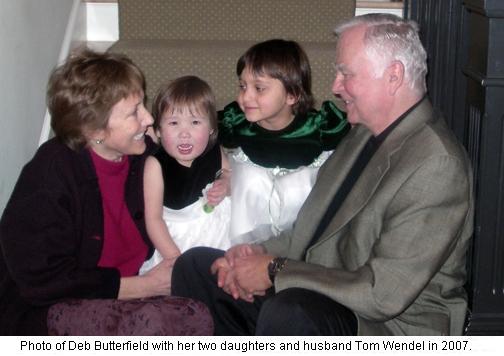
A few years ago, Deb lost her transplanted pancreas and was again on the registry for a new pancreas, but my sense was that her own health issues kind of took a back seat to a new joy she found in raising her two daughters (as well as being the wife to her loving husband Tom), something she described to me as the life she once thought that she'd never be able to enjoy. She sent me a few photos and wrote:
"I am so happy to be living a life in my 40s that I dreamed of in my 20s and never thought I could have! I've attached two pictures of my daughters ... there are not words enough to tell you how much joy they have brought us."
Today, heart goes out to Deb's family, and I can only hope they realize how enormous her legacy is within the diabetes community. Her presence will be felt for a long time to come even though Deb is no longer with us. In fact, Deb was the individual who encouraged me to start blogging when that was still a brand-new phenomenon, and there are a number of others who did the same thing. Whether Deb had the foresight to realize it at the time, an entire group of like-minded individuals who were blogging about diabetes emerged to become what is today sometimes referred to Diabetes Online Community (or "D-OC" or even "DOC"). I owe a tremendous debt of gratitude to Deb for shattering the invisible wall I once felt separated diabetes researchers from patients, and for that, I am eternally grateful.
Thursday, August 25, 2011
Connecticut Screwed Patients With Chronic Diseases Yesterday
Yesterday, the state of Connecticut made news on the new healthcare law that requires states to create exchanges where insurance plans can be purchased when the requirement to buy healthcare insurance goes into effect in 2014. But the reason the state made news is not for a good reason: the State of Connecticut effectively screwed its residents by ignoring a requirement in the Federal laws that requires that there be a CONSUMER REPRESENTATIVE on the Connecticut insusrance exchange. Insurance exchanges must be in states which have not opted out of the law (and that includes Connecticut) established to offer state-regulated and standardized health care plans, from which individuals may purchase health insurance plans that are eligible for Federal subsidies when they required by Federal law to do so in 2014. The exchanges are the quasi-public authority that govern these insurance exchanges.
Let me go on record as saying that Connecticut is no red state. To cite a rather vivid example: same sex marriage has been legal in Connecticut since 2009, and there were never protests of angry citizens marching in the streets arguing to stop it. In fact, after the courts determined that prohibiting same sex couples in Connecticut from receiving a marriage license was a blatant violation of the state Constitution's guarantee of equal protection under the law (the judge wrote "The Connecticut Constitution requires that there be equal protection and due process of law, not that there be equivalent nomenclature for such protection and process"). After that, the only legislative debate that really occurred was over a rule which exempted churches and other religious institutions from being required to facilitate same-sex marriages (the State does not require religious institutions to perform same-sex marriages, but a Town Clerk may not legally deny a same sex couple a marriage license because of his or her personal religious beliefs since they are civil servants on local government payrolls, they are NOT workers for private religious institutions, hence they are not permitted to let their personal beliefs interfere with doing their jobs). Socially, the state (which is sandwiched between New York, Massachusetts and Rhode Island) is of the "live and let live" persuasion; which means keep your nose out of our personal business, and you can expect the same courtesy in exchange.
A majority of citizens in Connecticut voted for President Obama, and surveys also show overwhelming support in the state for the The Patient Protection and Affordable Care Act (PPACA) which became law last year. Yesterday, the list of members of the Board of the Exchange for the State of Connecticut were revealed (see HERE), and many people with chronic illnesses in Connecticut were justfiably p!$$ed off. The reason: there is NOT ONE single consumer representative is on the exchange right now -- not one, yet Federal law actually requires that a consumer representative be on the exchange board. As Connecticut lawmakers selected the exchange members, they staffed the board exclusively with people who either work for the health insurance industry (the state being home to giants like Aetna make them plentiful), state government or other industries like hospitals that profit from providing healthcare.
Yet the federal Exchange regulations say, in the preamble, as follows: "Exchanges are intended to support consumers, including small businesses, and as such, the majority of the voting members of governing boards should be individuals who represent their interests." 76 Fed. Reg. 41872 (7/15/2011).
As a prominent blogger who writes the blog "Advocacy for Patients with Chronic Diseases" (she happens to be a patient with Crohn's disease and gastroparesis, and is also a lawyer more than 25 years) and is based in Farmington, Connecticut (near the state capitol Hartford) eloquently WROTE:
"I don't know about you, but that surely reads to me as though there should be -- oh, I don't know, maybe ONE consumer representative on the Board? Maybe one public official could have appointed someone who would join Vicki Veltri in expressing the consumer point of view?"
In fact, all of the 14 individuals selected for the Board are either members of Governor's administration, former insurance company executives, or individuals with political connections, but none, aside from the non-voting state Healthcare Advocate, are consumer advocates.
What does this mean?
Well, think about it. The Board is made up of government workers and insurance people, so how likely is it that the state's insurance exchange is going to represent the interests of PATIENTS, rather than the insurance industry? Do you trust a former Aetna executive to make choices that represent the interests of patients, or of the industry they have so many personal connections with? The Board also determines how the providers in the exchange are selected, what criteria will be used for selection, etc.
All of this certainly seems like an invitation for a lawsuit, doesn't it? In the meantime, if you live in Connecticut and a actually have chronic illness like say, diabetes, you might consider calling your state lawmakers and giving them an earful about finding ONE patient representative on this board. To find your local state government representatives, visit http://www.cga.ct.gov/.
Wednesday, August 03, 2011
Pop Culture Anniversaries: Willy Wonka at 40
Monday (August 1, 2011) happened to be the thirtieth anniversary of MTV. While I cannot say that I actually watched the premier (my parents didn't even subscribe to cable until a few years later, and even that took some convincing!) of the cable network, I certainly do remember watching all of the original VJ's: Martha Quinn, Mark Goodman, Nina Blackwood, Alan Hunter and J.J. Jackson. It wasn't until 1992 when MTV introduced "The Real World" and a number of similar shows that have nothing to do with the "M" part of it's name ("M" originally stood for "music") when music on MTV started to fall by the wayside, and it wasn't until late 1990's when the network would stop showing music altogether (at that point, I pretty much stopped watching MTV and I have little use for MTV these days), but I still figured it was worth sharing the anniversary since it was every bit as important as diabetes was for me growing up.
Happy Pop-Culture Anniversaries
By now, I'm guessing most of my readers say my July POST that commented on my own 35-year anniversary of a type 1 diabetes diagnosis, and how I didn't much feel like celebrating in spite of having every reason to. I would also presume that nearly everyone has already seen the YouTube clip commemorating the 30-Year Anniversary of MTV's launch (see http://youtu.be/Cw6xesXLIAA if you haven't, but would like to do so) so I won't be sharing that stale clip here. However, I will share the ABC News clip on MTV's original VJ's (video jockey's, similar to DJ's for disc jockeys): "Where Are They Now?" which I doubt many of my readers caught on the news. The clip can be viewed on the blog http://www.80svjs.com/?p=269 (see also http://t.co/GeSNVaq):
As it turns out, there was also another anniversary in June, that being the 25th anniversary for the John Hughes film "Ferris Bueller's Day Off" (hat tip to the GenXTinct blog on that news) which starred Matthew Broderick (who achieved teen fame starring in another movie known as "War Games" a few years earlier playing a computer nerd who accidentally nearly started World War III on his personal computer with a dial-up modem, a testament as to how long the online community has really been around in one form or another). Truth be told, I had already graduated from high school when that particular movie came out, but I could still appreciate its humor as a college freshman.
However, today's post really has nothing to do with MTV, Ferris Bueller or War Games. Instead, today's post is to commemorate another entertainment anniversary which took place back on June 30, 2011: The 40th anniversary of the original Willy Wonka & the Chocolate factory movie which premiered on the same date in 1971 (and to share a "Where Are They Now?" video segment on the child cast of that film, all of whom are now certifiable adults).
The movie, which was based on a popular children's book written by British author Roald Dahl named "Charlie & the Chocolate Factory" was first published in 1964. The book was about a boy named Charlie Bucket who lived in a poor, ramshackle house (his mother was widowed in the book) who wins one of just five "golden tickets" into the famous but highly-secretive Willy Wonka's Chocolate factory. (The author also wrote several other books which remain popular with the grade-school set even today, including Charlie & the Great Glass Elevator, one of my favorites James and the Giant Peach which was made into a movie back in 1996; that film was also directed by Tim Burton who produced the second film version of Charlie & the Chocolate Factory starring Johnny Depp in 2005, plus the book The Fantastic Mr. Fox which also made it to the big screen in 2009). The 1971 movie was a musical of sorts, and has soundtrack and everything.
Pure Imagination


I have little doubt why the story of Charlie & the Chocolate Factory is so positively alluring to children: to be selected as one of just 5 lucky winners to get into see a chocolate factory that is essentially closed off to the public. You can imagine the appeal to almost any child -- it's pure fantasy (or, in the words of one of the film's songs, "Pure Imagination"), and to a kid who was recently diagnosed with diabetes and told they were basically forbidden to eat candies (yes, they did try to claim that back when I was diagnosed), it has always held a special place in my childhood memories.
The following MP3 is the song "Pure Imagination" that was featured as one of the songs in one scene from that movie (which is only available if you're reading this from my actual blog):
I should note that my mother more than made up for it when I was growing up. For example, she had learned how to make chocolate from some of the women at our church (back in the days I actually went) and decided to take those candymaking skills home. She acquired a number of candy molds so my sister and I (both of us have type 1 diabetes) could also be able to enjoy an Easter basket that included candy just like my younger brother received. She found a local supplier of sugar-free chocolate (bulk which had to be melted down), and effectively enabled me, my sister and younger brother to have our own candy factory right at home. That was, at least in my experience, as good as visiting some commercial candymaker's factory!
Now, I was only 2 years old at the time the original film premiered, so I never actually saw the movie on the big screen, but I can remember that it was a really big deal when it made it to network television a few years later, and I was in the right age group (in the second or third-grade) when kids were first started reading books like "Charlie & the Chocolate Factory". The film's producer's took some creative liberties with the title (for example, naming it Willy Wonka) and also with some parts of the story, including adding a scene where Charlie and his grandfather drink fizzy lifting drinks and must burp to keep from floating away, which the author told the British press he absolutely detested, hence he avoided licensing any of his other books to be made into films while he was still alive.
As I noted, Hollywood remade the film in 2009 and the star was Johnny Depp (they also called the film Charlie & the Chocolate Factory which was the real title of the book, not Willy Wonka & the Chocolate Factory, in part because the author said he felt the other title diminished the story about the child's experience and focused inappropriately on the owner of the factory instead, which was probably a fair criticism). While there was lots to like about new version, I suspect the author might also have hated the remade version, too. The reason: the part about Charlie's father being a dentist was NEVER in his original book. In fact, in the original book, Charlie's mother is a widow raising her son, parents and in-laws in a tiny house with a low-paying job, so Tim Burton took some creative liberties with the story as well, which was why the British author reportedly hated the 1971 version. However, I think the script of the original film follows the book more closely than the new version.
Willy Wonka Cast: Where Are They Now & A TV Reunion
In any event, to commemorate the original film's anniversary, I happened to notice a while back in one of the New York daily tabloid newspapers, in this case The Daily News, has run a series of "Where are they now?" updates on various movies and TV shows over the years, and they did one about Willy Wonka & the Chocolate Factory back in May (probably in anticipation of the film's anniversary). You can view the NY Daily News feature (which includes a cool slideshow presentation on many cast members both then and now) for the original Willy Wonka movie at http://goo.gl/VKrL.
While reading up on this, and in exploring some blog links from the author of book that I noted in my PRECEDING POST "Whatever Happened to Pudding Pops" I discovered that back around the time of the original Willy Wonka movie's 40th anniversary, NBC's Today Show had a cast reunion (including the cast of children from the film; curiously, Gene Wilder who played Willy Wonka in the flick was not there) which can be seen at http://www.msnbc.msn.com/id/21134540/vp/43038138:
They've also established a website at http://www.willywonkamovie.com (which they aren't yet promoting) where you can view the trailer for the revised version, and will be adding some games and miscellaneous information in the not-too-distant future. According to one of the PRESS RELEASES, "To honor the 40th anniversary of the film, Warner Brothers has digitally remastered the original movie and will be re-releasing a high-definition, BlueRay version on October 4, 2011. Willy Wonka & the Chocolate Factory: 40th Anniversary Ultimate Collector's Edition will contain more than an hour of extras, including Mel Stuart's Wonkavision, a new interview with the director; a new featurette about Roald Dahl, author of the book upon which the movie is based; a 144-page production book reprint filled with photos and notes; and archival letters. The package also will contain a retro Wonka Bar-shaped tin box with scented pencils and eraser, and a limited-time Golden Ticket Instant Win Game piece for a chance to enter and win a trip for two to Los Angeles. As in the movie, there will be five grand-prize winners. There also will be 40 reproductions of the original theatrical poster given away as runner-up prizes." I've included the trailer below (again, you must watch it from my blog, not your RSS reader, otherwise visit the aforementioned link!):
That should satisfy any cravings for chocolate I may have for a while!
Tuesday, July 19, 2011
Mid-Life Crisis? No, Just D-Burnout
Saturday (July 24) marks my 35th anniversary living with type 1 diabetes, and although I have plently of reason to celebrate (I'm still largely complication-free after 3 and a half decades of living with this f'ing disease), but I don't really feel much like celebrating. (My CWD Quilt Square can be seen HERE [my sister's follows mine, FYI]).
No, it's not about all the unsubstantiated "cure will be here in another 5-10 years" fiction that medical people once told me regularly; after nearly 4 decades with this disease, I'm no longer a naïve fool. Good control does not eliminate the possibility of complications, but merely reduces the odds of getting them.
My current funk could just be another round of diabetes burnout, which frankly hits most people living with a chronic illness for any duration, but I think my fellow diabetes blogger colleague Bernard Farrell said it best at the 2011 Roche Social Media summit which I attended last month but have yet to write about: it becomes overwhelming and even depressing to live, breathe and think about diabetes 24/7/365 including blogging and elsewhere online (I'm paraphrasing quite a bit here), and sometimes we need to take a break from it just to keep our sanity. The reality is that even a "model patient" gets damn sick of talking about it all the time, and if they don't, my guess is they will at some point. As much as I enjoy being a part of such a terrific community, there's more to life than diabetes, or at least there SHOULD be in order for there to be any life balance.
I have NOT abandoned self-care, nor have I abandoned my presence in the diabetes online community. My acclaimed Twitter feed continues (that comes pretty easily to me), and I've done the weekly chats, too, but blogging: not so much as of late. It's not that I've given up on blogging and I must admit I miss a few of the earlier bloggers who have since given it up, including Vivian Schaffers (@RedbudMama) of DanielDoo who decided to stop blogging recently, but I'm of the mindset that if I don't have anything really new or interesting (from my perspective) to write about, then I don't really want to write. Some of my readers miss me, but rest assured, I have not abandoned this blog, only that I need some break time to provide me a fresher perspective on things before I start writing again with any frequency.
When I first started blogging back in September 2005 (you can catch my very un-glamorous early posts HERE), my goal was never specifically to talk about MY life with diabetes, but to fill what I saw as an enormous void in the media about legitimate news on diabetes, and also to use this to vent some of my well-deserved frustation with the media's blatant disservice to diabetes coverage. The media has been preaching the same monotonous story when it comes to diabetes, and it really is starting to sound like a broken record (for the iTunes generation: in the old days, when music was recorded on plastic records and when those records were scratched — hence the term broken — part of the recorded music would repeat itself). No wonder no one cares about diabetes — the media are simply unable to make the news remotely interesting. My goal was twofold: 1) communicate useful, interesting information about diabetes and 2) provide a patient perspective to that news. I believe I've accomplished that, and not just with my blog, but also my Twitter feed which now has over 700 followers.
Plenty To Write About
I have plenty of stuff I COULD write about. For example, the recent social media summit, which I'll cover ... eventually. In the interim, if you're interested, I would refer you to Wil Dubois' coverage of the events, because his take-away was very similar to mine. Catch his post HERE for a good slice of that, and at some point, I hope to share some things that my peers have not yet covered.
Another example of some coverage-worthy stuff: diaTribe recently published a free book entitled "Targeting a Cure for Type 1 Diabetes" which I actually thought was pretty darn good IMHO, although I take issue with a few points in their assessment (what kind of honest critic would I be if I didn't have any issues?).
What points, you ask?
Well, perhaps I'll save them for a formal book review when I feel like writing again, but most notable are the four pages of "Advance Acclaim" from so-called diabetes experts which struck me as more trumpeting the organization's own horn about their contacts in the field rather than adding any incremental value to the contents of their work.
I mean really, who's their audience for this book, and do they really think we care what these people thought of the book? Some acknowledgement is OK, but FOUR pages worth? That was overkill. But once you pass that, there is some great content there.
I also continue take issue with the incredibly naïve presumption that a closed-loop insulin pump system or Roche/Genentech's costly new drug for diabetic macular edema will, in Aaron Kowalski's (of the JDRF) words from the "Forward" statement he wrote for the book "... will significantly ease the burden of diabetes, reduce the risk of complications, and keep people healthy while we drive toward a cure." I get the logic, but it's a pretty daring presumption that all who want or need access to these treatments will actually have them, especially when the data suggests otherwise.
For that reason, I think devoting so much content of the book — indeed, an entire chapter — dedicated to a closed-loop insulin-delivery system also seems like overkill. I know diaTribe/Close Concerns is intimately familiar with this, but that does not render it appropriate content for a book on CURES. Besides, while these devices are very alluring to technology folks and, yes, even some doctors, a number of interviews has consistently shown that few patients (or parents of kids with type 1 diabetes) actually view this as a cure. Also, knowing that so many patients who might benefit from such a device will be unable to afford is more typical of consultants who may have a perspective which simply out-of-touch with the way things really work. So far, the JDRF is pushing hard down this path, but the money-is-no-object attitude towards treatment and care is an area I will continue to call the organization's attention to because it's an unfortunate reality today, unlike a yet-to-be-approved closed-loop insulin delivery device, which still faces significant challenges attaining U.S. regulatory approval.
Let me offer the following to support my position:
Today, more than 3 million Americans who live with diabetes lack ANY form of healthcare coverage according to my conservate estimations using data from the Kaiser Family Foundation and the CDC, and whether these people (many of whom actually work full-time in jobs such as waiters/waitresses, cashiers, and other laborers) will be able to afford coverage when state insurance exchanges are established remains to be seen. Many will (whether willingly or not) likely take the most rational choice to pay a fine because it's most likely to be far less costly than the insurance would be, and if Congressional born-again budget hawks get their way, subsidies via tax breaks for these people will be one of the first elements of healthcare reform to be killed because they believe the U.S. Federal Budget cannot afford it (I have to ask where these people were when we went from having a budget surplus when President Bill Clinton left office to the budget-busting deficits President Barack Obama actually inherited when he took office?). That's a sad reality in the U.S. today. What's more, the out-of-pocket costs being passed on even to employees who actually receive healthcare insurance via their employers is growing far beyond the rate of inflation. In fact, the median deductible for traditional PPO plans (the most common type of insurance offered by U.S. employers) doubled in 2008 to $1,000 according to a study from Human Resources consulting firm Mercer (see HERE).
With U.S. unemployment (and underemployment) at levels not witnessed since the late 1970's (that seems to be a recurring theme in this post, meaning the 1970's) and job growth unlikely to pick up at a pace needed to put many back to work before 2014 as the economist's consensus seems to suggest is likely, so the access issue isn't going away anytime soon.
Finally, Chapter 4 is a bit empty from my perspective. While it is indeed early on the regeneration front, I cannot help but get the impression that the writers didn't have many contacts at any of the companies in the regeneration front, so they covered a few studies already published in the scientific and/or medical journals, but beyond that, not much is very new.
By and large, however, I really DO recommend downloading their book and having a look at it. Most is excellent and provides a realistic assessment of where things stand, and their conclusions that various cure components are likely to require some combination of new therapies (such as autoimmunity treatments) to be effective. While their time assessments are excellent, I would just note that diaTribe failed to address anything on the topic of cost. For more added assessment on that, I recommend visiting my November 2010 post entitled "The $100,000 Diabetes Cure" (After all, why not plug my own work? I think I have reason proud of it).
A Departure from Typical Scott's Web Log Content
Beyond that, I am taking a bit of a departure from my usual diabetes-related stuff. It's my blog, so I'll write about whatever I feel like! With my 35th dia-versary, perhaps I've been having a bit of a middle-age crisis. After all, I now have a few grey hairs on the temple, and although age also brigs wisdom, it brings other less-desirable stuff, too. (I cannot help but think of the Sex In the City episode where Kim Cattrall's character discovers a grey hair — "down there" — and says that if she were to pluck that hair, four more could come to it's funeral, so she decides to use Clairol hair-coloring to eliminate the problem and unfortunately leaves the hair dye in too long so it's now bight red like Bozo the Clown, hence she believes she has "Bozo the Bush") ... and now that I've offended at least a few readers, back to my own mid-life issues.

Acknowledging the issue is the first step towards dealing with it, so I decided to celebrate (as fellow d-blogger Wil Dubois said at the Roche Social Media Summit, his family celebrates not only successes, but also really big failures, too) so just maybe my mid-life funk could be included among those things.
Apparently, I'm not alone in celebrating or at least acknowledging the period when discos and mood rings, halter tops, and bell bottoms were still in vogue. Recently, a book co-authored by Gael Fashingbauer Cooper (she blogs at http://pcjm.blogspot.com/ or on Twitter @genxtinct, and has another book-related blog called GenXTinct) entitled "Whatever Happened to Pudding Pops? which was recently featured on NPR's popular "All Things Considered" program. You can listen to that story at NPR News HERE (if you search NPR, use "The Sweet Taste Of 'Pop' Culture Nostalgia" in the search field):
My opinion on that book: a definite read if you fall within the relevant age group, and although there are few facts that are incorrect (for example, they failed to note that several TV shows are now available on DVD), it's not heavy reading. The book is a series of vignettes of maybe 2-3 pages each covering some aspect of pop culture that was prevalent in the 1970's and 1980's, so it can be read in bits and pieces — perfect bathroom reading (comedienne Joan Rivers used to say the same thing about the National Enquirer, and how it was replacing bran muffins, but I digress). I guess that means I'm really officially middle-aged, as there's now even a book to chronicle it! On the subject of stuff from the 1970's, readers may be humored to learn that a fair number of the products that were sold in the 1970's is actually still available in what's pretty much their original formats.
 For example, if you were one of those people who used the ORIGINAL Clairol Herbal Essence shampoo (you know, the green stuff in an unimaginative shaped bottle) that featured a cartoon of a blonde hippie woman on the bottle, or "Gee, Your Hair Smells Terrific" shampoo, "Body On Tap" shampoo featuring a magical haircare ingredient: beer, "Lemon Up" shampoo, and even a variety of "Agree" shampoo to help fight the greasies, even though regular hair-washing also takes care of that 1970's personal grooming challenge — apparently, there may have been an oil shortage back then, just not in people's hair!) which they call "Flat to Fluffy" shampoo, even a recreated version of the Farah Fawcett-endorsed Fabergé Organics Wheat Germ Oil & Honey Shampoo, you can still buy all of that stuff! But it's not limited to shampoo, and has numerous other relics and throwbacks from the 1970's ranging from vintage monopoly games and Fisher Price toys, know that you can buy many of those items at the online "Vermont Country Store" which describes itself as "Purveyors of the Practical and Hard-to-Find Since 1946" carries these items. To be sure, a bottle of "Gee, Your Hair Smells Terrific" (apprently, Vermont Country Store is actually licensed to use that registered trademark) or the original green, Herbal Essence shampoo (they call it "Country Herbal Shampoo" since Procter & Gamble still sells a reformulated version and still owns the trademark) isn't cheap.
Expect that a trip to the beauty salon of your past to be rather costly indeed: a bottle of "Gee, Your Hair Smells Terrific" will set you back $14.95 plus another $5.95 for shipping. At that price, you could just as well buy salon haircare products, but it might not transport you back to "the garden of earthly delights" in the same way as one of these products will.
While I'm on the subject of the 1970's, I've prepared a playlist of some tunes from that decade, which you may listen to HERE:
Anyway, with that deviation from life with diabetes, I think I may be ready soon to return to blogging about it, only perhaps with an occasional deviation to clear my mind!
Thursday, June 09, 2011
Teplizumab and DPT-1: "Not Dead Yet"?
Hopefully, Phil Southerland will pardon me for borrowing the title to his new BOOK (as far as I know, he cannot copyright a mere 3 words, although they can be trademarked, but that process takes a number of years of using the term consistently as a brand name before the U.S. Patent and Trademark Office will even consider it), but I felt like it made a compelling headline for today's post.
How many of my readers remember an experimental anti-CD3 monoclonal antibody treatment called teplizumab that had trials with a cutesy name: Protégé? That trial was being undertaken by a closely-hold, Maryland-developer named Macrogenics, Inc. and it's big-pharma partner Eli Lilly and Company (a marriage that was the result of the JDRF pairing the two companies together). You might, because this product has been promoted as a promising autoimmunity treatment for type 1 diabetes for a while now.
Unfortunately, last October, the teplizumab Protégé trial was the first of several recent failures for late-stage autoimmunity treatments (and the first of TWO that that the JDRF worked to help find big-pharma partners for) that FAILED to meet their clinical endpoints (the other was the also-cutesy trial name DEFEND sponsored by Massachusetts-based Tolerx, Inc. and it's big-pharma partner GlaxoSmithKline, also facilitated by the JDRF ... the third was the Diamyd trial which was NOT facilitated by the JDRF). The results of these trials, because they were funded (in part) by the JDRF, fortunately, will actually be published in medical and/or scientific journals and are due to be discussed at the forthcoming ADA Scientific Sessions in San Diego in late June.
I found one of the endpoints that pharma partner Eli Lilly and Company insisted on using for the Protégé teplizumab trial to be inappropriate: they used a composite of a patient's total daily insulin usage and HbA1c level at 12 months as the efficacy endpoints, but curiously, not a patient's C-Peptide count, nor did the trial exclude participants who had good glycemic control, raising questions just how they could realistically expect to see any improvement in HbA1c for some participants -- after all, this was NOT a noninferiority trial. A patient's daily insulin requirement might be an acceptable measurement, but I still find the absence of C-Peptide count perplexing because they have no quantitative measure of how much endogenous insulin is even being produced without it. Whatever the measures, the teplizumab treatment failed to meet the defined endpoints.
The reality is that when it comes to measuring whether the pancreatic beta cells function, really, the ONLY appropriate measure is C-Peptide, and the former head of the FDA's Metabolic Group including diabetes (for some 12 years, I would add), Dr. G. Alexander Fleming has made just that argument (he's now CEO of Kinexum LLC, which is the angel-investor for a company known as Exsulin, Inc. which is developing a beta cell regeneration therapy (see his scientific journal article which makes this very argument, as well as the self-imposed quandry the FDA has historically had in trying to approve type 1 diabetes autoimmunity treatments HERE), although until fairly recently, there have been relatively few applicants for type 1 diabetes autoimmunity treatments the FDA has even had to evaluate.
In any event, Tuesday's (June 7, 2011) Wall Street Journal had an interesting article entitled "Trying to Prevent Type 1 Diabetes" by Shirley S. Wang. For readers who have paid access to the Wall Street Journal's content, the link to this article can be viewed at http://goo.gl/iyjJT (it's a long link, so I've shortened it for ease-of-use).
I won't share the entire WSJ article here, but the Wall Street Journal had a video clip that nicely summarized most of the key points shared in that article HERE:
One of the most noteworthy take-aways (for me, anyway) in this story was the fact that it was citing two clinical trials that were presumed to have failed, including the Diabetes Prevention Trial (a.k.a. the "DPT-1") using insulin that was pretty much declared dead several years ago (there was a leg of that trial that used injected insulin, and another that used insulin given orally -- the idea being that introducing synthetic insulin might help create a state of immune tolerance to the insulin-producing beta cells the body's immune system is likely to destroy in patients who are at high-risk for autoimmune-mediated type 1 diabetes). The other clinical trial cited was for teplizumab (noted above) which made news last autumn (in October 2011) because that Phase III human clinical trial had failed to meet it's primary endpoint (see HERE for details on that), which was a composite of a patient's total daily insulin usage and HbA1c level at 12 months.
In April 2008, Eli Lilly and Company's chief executive officer (CEO), John Lechleiter, referred to teplizumab as one of that company's three most promising experimental drugs in the company's pipeline in an investor event, yet Lilly rapidly dumped it following the failure of the Phase III clinical trial.
This is why the news that the drug might not be dead after all is so interesting.
It's important to note that Lilly hasn't exactly been a good pharma partner for the JDRF or in pursuit of type 1 diabetes treatments; frankly, in my honest opinion, they've been a downright $#!tty partner -- having screwed the JDRF over twice in two partnerships the organization facilitated. In my post last autumn entitled "The $100,000 Diabetes Cure", I cited evidence of another JDRF partnership with Lilly in which the Indianapolis-based drugmaker essentially screwed the JDRF over by turning a therapy designed to regenerate islets in patients with type 1 diabetes into a trial for patients with type 2 diabetes (most likely because Lilly saw more potential dollars as a type 2 treatment; it is a company that has a fiduciary responsibility to its shareholders), but when the trials in type 2 didn't work out, Lilly dropped the gastrin-based therapy (with the unglamourous name "TT-223") faster than a hot potato (see HERE for more detail) -- in spite of receiving initial financial support from the JDRF!
Shortly after that event, me and another diabetes blogger (Joshua Levy) reached out and the JDRF confirmed that the evidence still suggested that TT-223 may indeed work in patients with type 1 (and also in type 2, as the endpoint measurements in the type 2 trial were again, quite suspect). The Toronto-based developer of that drug, Transition Therapeutics, Inc., was forced to regroup and the JDRF may again play matchmaker with another company (assuming, of course, that Lilly's dumping the molecule hasn't poisoned others from touching it). However, as I suggested in my "$100,000 Diabetes Cure" post, I believe the JDRF has learned some lessons from the early experiences and has indeed made changes to more recent industry partnerships, making funding contingent upon meeting various milestones rather than up-front payments, for example.
An excellent example of that is contained in a brand-new partnership announced this morning (also for autoimmunity) between the JDRF and Massachusetts-based Selecta Biosciences, Inc. The news of this partnership can be viewed HERE, HERE and HERE. Of note is the fact that with this latest industry partnership (which, incidentally, JDRF plans to increase fairly dramatically the number in the next few years). I heard this from the source, when I met face-to-face with Richard Insel and Karin Hehenberger a few weeks ago at JDRF headquarters a few blocks down the street from my office (I haven't addressed that meeting in a post yet, but I will!). In particular, note the language in one of the JDRF press releases on the Selecta Biosciences noted above:
"Through the research partnership, JDRF will provide milestone-based [emphasis mine] financial support and expertise, with the goal of applying Selecta's vaccine technology toward the development of vaccines for type 1 diabetes."
The key term here is MILESTONE. In effect, the JDRF is telling the partner "we'll give you funding, but it's contingent upon your meeting some requirements, it won't be a lump sum distribution up-front". This is a pattern that has been evident in several recent JDRF-announced industry partnerships. Without getting too far off topic, I would like to say that had these negative experiences with the Lilly partnerships not occurred, the lesson of milestones would not have been taught. After all, there really was not much experience in industry partnerships among other nonprofits, so JDRF was indeed charting a new course. Hopefully, the Selecta partnership will be beneficial for all parties involved.
Getting back on topic for "Not Dead Yet"
The Wall Street Journal article also cited the presumed-dead DPT (Diabetes Prevention Trial for type 1 diabetes), specifically the leg of the trial involving oral insulin. As journalist Shirley S. Wang noted, although taking insulin orally has absolutely no impact on glucose level (there's no therapeutic benefit), but taking insulin (in it's current form) orally may introduce self-tolerance to the beta cells that produce and effectively stop the body's immune system from attacking itself. Although one leg of the DPT-1 had already failed to meet it's efficacy endpoint, there was plenty of skepticism that the trial wasn't working. One thought was that perhaps the dosage of insulin was insufficient, others believed that the efficacy measurements weren't correct.
In any event, the trials are apparently not dead -- yet. The reality is full trial details have yet to be disclosed for many of these, but the JDRF did ensure that the trial results do not get buried in the pharma and biotech cemetery. Typically, results for government-funded trials get published in medical and scientific journals, but drug trial results are buried by the companies and the FDA. For the oral insulin trials being pursued by the U.S. National Institutes of Health's National Institute of Diabetes and Digestive and Kidney Diseases, apparently there there is sufficient evidence that a follow-up trial is worth the cost to taxpayers. Some of the early critiques of the DPT-1 was that the dosage may not have been sufficient to have a measurable difference. The same holds true with the Macrogenics teplizumab trials, even though that trial did not involve U.S. Government funding.
Back in March, I asked the JDRF some specific questions about not only the teplizumab trial, but also the failed Tolerx/GlaxoSmithKline otelixizumab DEFEND-1 study which also failed in March 2011 (see HERE for details on that). This leaves the JDRF with relatively few late-stage trials in the autoimmunity front (one of which is Bayhill/Roche, which the former Genentech executives were claiming is being delayed not due to lack of interest, but resource constraints at the company. I don't necessarily believe that explanation, but again, because it was an earlier partnership, the JDRF may not have had milestone requirements for payments built into the agreement. Call it a lesson well-learned).
However, its typical that full trial results for any drugs in development are rarely (if ever) published in medical journals in their entirety, rather pharmaceutical companies are quite notorious for selectively releasing data which make treatments appear most favorable, although the results must still be submitted to the FDA and TrialNet, that's the extent for which trial data is actually shared.
So I asked the JDRF to comment.
My first question was whether JDRF had any rights to full-scale trial results (data, etc.) for both otelixizumab and teplizumab? After all, there is considerable learning that can be attained from these trials even if the drugs failed to gain FDA approvals?
Second, it may still be possible that these medicines worked in certain subsegments of the trial population. If that is true, it might be important for JDRF to know which segments the drugs worked in. Again, having access to the full trial results would be critical to know this, and perhaps more importantly, having these trial results published in medical/scientific journals would be even more important to advance type 1 diabetes research, and autoimmunity treatments in particular. What, if anything, can JDRF do to ensure these trial results are published?
I believe the JDRF appreciated my questions, but did have to research before responding to me, which they did (Bennet Dunlap and I were also able to meet some of the JDRF's Scientific leaders shortly after that, catch his post HERE). Here is how the JDRF responded to my questions:
"Thanks for getting in touch about this. Your questions are very thoughtful. I’m sure you saw JDRF’s statement on the DEFEND-1 trial that we posted on our website last week when the results were announced (http://www.jdrf.org/index.cfm?page_id=115376); however, you’re seeking more in-depth information. I will discuss your questions with our internal Research team and get back to you with a response."
A follow-up e-mail with the following was sent a week or two later:
"Hi Scott,
I spoke with our Chief Scientific Officer, who provided some information to help me respond to your questions. JDRF agrees that sharing and understanding the data from the DEFEND-1 trial is important, in order to provide context for the results and help us understand what didn’t work and what, if anything, did. As you know, the data we glean from therapeutics like this one that don't succeed in trials is still important to inform our research efforts, especially for planning future new onset type 1 diabetes trials.
Specifically, JDRF plans to review the data from the trial once it has been thoroughly evaluated by our partners Tolerx and GSK to help us determine what the results mean for otelixizumab specifically, and anti-CD3 in general. Our understanding all along has been that Tolerx has been planning to present the data from the study at a major diabetes conference [the ADA Scientific Sessions in San Diego], and/or submit it for publication in a peer-reviewed journal. We will certainly look forward to the data being presented in one of these forums.
Regarding the MacroGenics Protégé trial, it’s true that teplizumab did not meet its primary endpoints in people with recent onset type 1 diabetes as well. However, the NIH is recruiting for a new trial to test teplizumab for preventing type 1 diabetes in people at risk: http://www.diabetestrialnet.org/studies/ACD3.htm. So there is still an opportunity to learn more about this anti-CD3 treatment and whether it is effective in slowing down or stopping the autoimmune response that causes type 1.
I hope this information answers all your questions. We will be sure to communicate further if we learn any new information about these trials, or anti-CD3 in general."
I appreciate the JDRF's candor, and I honestly believe these experiences and the fact that people like myself, Bennet Dunlap, Joshua Levy and others who are challenging the organization on these issues is indeed being recognized. The fact is that JDRF's new CEO Jeffrey Brewer is also cognizant of these issues, and changes appear to be moving in the right direction. Let me add that we are entering a brand new era for industry-nonprofit partnerships, so the early (negative) lessons learned have been valuable, and its better that these lessons are learned early so that future agreements address these, and the evidence of milestones (payment contingencies) is evidence of that.
Wednesday, June 01, 2011
It Get's Better for People With Diabetes: You Can Do This!
On Weds (5/5), Kim Vlasnik at "Texting My Pancreas" had a POST about a recent Google-sponsored TV commercial for the "It Gets Better" campaign which was started by Dan Savage. Mr. Savage is known for an online (mostly YouTube videos) campaign he started which began as a response to growing numbers of teen suicides for sexual orientation that were taking place across the country, from Billy Lucas' suicide in Indiana, to Justin Aaberg's suicide in Minnesota. Then there was the Tyler Clementi suicide at Rutgers University in New Jersey that coincided just as "It Gets Better" campaign was taking off.
The TV commercial for Google's Chrome browser (which is, incidentally, my browswer of choice these days, and has been for about a year now because of it's speed) features the "It Get's Better" project, and the spots premiered during the show Glee, which Newsweek called "the gayest show in the history of network TV." Whether that's true or not, Glee does focus on the perceived misfits and losers of an Ohio high school and their favored school social activity, the high school Glee Club. I am referring, of course, to the Newsweek interview issue in which the magazine featured Dan Savage and actress Jane Lynch (who stars as the cheerleading coach Sue Sylvester on Glee). To read that interview, please see http://goo.gl/ljKGt. The mere fact that former Fox News TV talkshow host Glenn Beck feels threatened by "Glee" (see HERE) is even more reason for me to want to watch it ... with glee!
In that interview, Mr. Savage said something I found very interesting: "I think the gay community does a disservice to a lot of gay kids when we beat the drum of 'come out, come out, come out.'" and Jane Lynch echoed his sentiment by adding "It can be really dangerous to come out to families and to school" because, the article noted, quite frequently, those institutions are the biggest part of the problem. Of note is the fact that 40% of all homeless teenagers are actually kids who were thrown out by their parents when they came out or were outed by someone else. Good, Christian parents, ready to discard their kids for being something THEY don't believe in. But this story isn't about the "It Get's Better" project, it's about something kind of like it for the people with diabetes (PWD) community.
You Can Do This

Diabetes According to the Medical Profession, Featuring a Lack of Honesty
That's also my take on life with diabetes, and I think it echoes what Kim is doing with The "You Can Do This" effort which mirrors the sentiment about honest talking about life with diabetes. Rather than yet another campaign by doctors, CDEs, nutritionists who tend to marginalize the amount of ongoing effort is required to manage this disease for the rest of people's lives, we as PWD's are going to offer something that hasn't been done before: honesty about life with a chronic disease like diabetes. Anyone expecting Sprinkles the Unicorn is going to fart glitter all over the place when you have diabetes is living in Never, Neverland. I agree that we need to speak the truth in a way that the medical profession simply doesn't have the balls to do themselves: by telling things like they ARE. A comment I received on a blog post said it best: "Diabetes is not a death sentence, but it IS a life sentence." (Get used to it!)
While that's funny on the surface, the reality is that no one frankly admits what a CHRONIC disease really means. But, just as Dan Savage said, bad things happen (like diabetes) but there's enough space for you to create a life for yourself (with diabetes), find friends and a community (like the Diabetes Online Community). But we get enough misrepresentation of the truth about how livable with diabetes is from doctors and CDEs. Living with a chronic disease is neverending, and $#!tty things happen even when you follow the rules. To succeed with diabetes, this really is a marathon, not a sprint, so beating the drum of who has the lowest HbA1c is actually very destructive in my opinion, and I have NEVER shared that on any social media community (TuDiabetes, DiabetesDaily, etc.) because I think it sends the WRONG kind of message IMHO. Guess what? I have opted NOT to join these efforts!
Your HbA1c is YOURS; Don't Feel Obliged to Share It
Personally, I don't want to share that information, and I choose not to, and I find medical researchers lusting after this data to be kind of deplorable. Incidentally, while I'm on that subject, the TuDiabetes campaign that I avoided like the plague was recently chronicled in the online, open-access scientific journal PLoS ONE, see HERE for details. The authors refer to us as an "an early adopter community" claiming that success with them "may comprise efficient platforms for bidirectional communication with and data acquisition from disease populations". David Mendosa wrote about it HERE. I have always been a big privacy advocate, and let me go on record as saying, don't share ANYTHING you don't want to. If it's none of anyone's business, don't feel compelled to share it. I don't, and guess what, I still see myself as an active, longtime member of the diabetes online community.
Don't Publish Details Online You Don't Want to Share, You're Not Obliged to Share Everything
Since when did personal privacy disappear just because of the internet? Seriously. For example, my readers may be somewhat shocked to learn that they won't find my personal e-mail address online even though I am what could arguably be called a diabetes blogger veteran (since 2005!), and I'm on most social media including some diabetes-specific outlets like the JDRF's Juvenation, TuDiabetes, DiabetesDaily and a few others. It's true, because I don't publish my e-mail address, and you shouldn't feel compelled to share yours, either! (There are ways around that, as I have recently added a feature that enables me to have people contact me from my blog without publishing my personal e-mail address). This comes down to not wanting to share every intimate detail about yourself just because of online social media. You are entitled to have things you keep for yourself and you don't have to share EVERY single detail. Also, I have been known to decline Facebook friend requests from people I've never met. I would recommend that everyone think about these things, because the way things are online, there are starting to be some permanent footprints that you cannot simply erase because you think you're done with social media!
I have a camera, but haven't recorded my own "You Can Do This" video ... yet, but I'm working on it. In the meantime, have a look at some of the videos posted already on the "You Can Do This" YouTube channel (more details can be found HERE). Hopefully, this will enable a large and growing group of us in the online space to make sure others know that they are not alone in living with this chronic disease!





.png)
