Back on July 27, 2016, a diabetes startup based in San Diego known as Companion Medical received FDA approval for a wireless-enabled insulin pen and proprietary mobile application branded as the InPen® system. The announcement is available at https://www.prnewswire.com/news-releases/companion-medical-receives-fda-clearance-for-smart-insulin-delivery-system-300304933.html.
The InPen was the first, and is (so far the only) FDA-cleared smart insulin pen that includes technology to:
- Calculate and recommend optimal dosing;
- Track history and timing of insulin doses;
- Display the time of the last dose and current insulin-on-board;
- Track and report to the health care provider; and
- Monitor insulin temperature.
Insulin pumps provide many of these features, and are typically most beneficial for people whose basal insulin requirements vary throughout the day. However, some patients do not want to manage routine infusion-set or pod changes, pay the additional costs associated with pump therapy, or remain attached to multiple devices. For those patients, a smart insulin pen can offer some of the benefits of connected diabetes technology without requiring an insulin pump. That is the market for InPen.
Companion Medical subsequently expanded InPen availability. The company announced FDA clearance for the Android version in 2018: https://www.prnewswire.com/news-releases/companion-medical-announces-fda-clearance-for-the-inpen-system-for-android-300677274.html. It later received FDA clearance for expanded pediatric use: https://www.prnewswire.com/news-releases/companion-medical-inpen-receives-fda-clearance-for-expanded-pediatric-use-301081939.html. Companion Medical also expanded its commercial operations, as described here: https://www.prnewswire.com/news-releases/companion-medical-announces-expansion-of-commercial-operations-300830663.html.
On August 11, 2020, Medtronic announced that it would acquire Companion Medical: https://www.nasdaq.com/press-release/medtronic-to-acquire-smart-insulin-pen-company-companion-medical-2020-08-11. Medtronic has since completed the separation of MiniMed Group Inc. The October 15, 2026, announcement is available at https://www.prnewswire.com/news-releases/medtronic-completes-separation-of-minimed-group-inc-302910198.html.


The InPen Itself
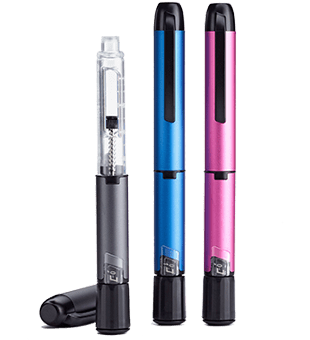
The InPen's underlying reusable pen mechanism is believed to have been supplied by Haselmeier GmbH, a German medical-device manufacturer based in Stuttgart. Companion Medical added its own Bluetooth electronics, sensor array, and software to create the connected insulin delivery system.
Haselmeier was acquired in 2020 by Sulzer, the Swiss industrial group whose businesses included drug delivery systems. The company's drug delivery activities later became part of medmix. The distinction matters because the smart features of the InPen are not the same thing as the mechanical pen injector itself. The electronics and software are what make a conventional reusable pen into a connected device.
Another example of a reusable pen injector is Ypsomed's ServoPen, described here: https://www.ypsomed.com/en/products/pen-injectors/servopen. In principle, a compatible electronic system and software could be developed around a reusable pen mechanism. That possibility is worth distinguishing from the question of who currently owns or markets the InPen system.
Smart Pens Have Had Limited U.S. Competition So Far
Novo Nordisk sells its NovoPen 6 and NovoPen Echo smart insulin pens in Europe, but neither has been FDA-approved or made available in the United States. The U.S. market has relied heavily on disposable insulin pens, while smart pens have made relatively little commercial headway.
Bigfoot Biomedical developed the Bigfoot Unity system, which used a smart pen cap and associated software. Abbott Diabetes Care acquired Bigfoot Biomedical in September 2022. I discussed that transaction in an earlier blog post: https://blog.sstrumello.com/2023/09/abbott-acquires-bigfoot-biomedical.html. The Unity product was subsequently discontinued by Abbott.
It is conceivable that technology developed for Bigfoot Unity could be licensed or otherwise used in another system, but I have no evidence that Abbott intends to make that happen.
The InPen supports certain branded insulin products from both Novo Nordisk and Eli Lilly & Company. Although InPen pens are sold in three different colors, those colors do not designate whether a pen is intended for basal or prandial insulin. By contrast, Bigfoot Biomedical's Unity system used color-coded caps to distinguish insulin types. Reusable pens for mealtime insulin have been particularly associated with Novo Nordisk's products and marketing. No patient who doses basal insulin once per day (or even twice per day) requires an insulin pen which raises the cost by 40%. Basal insulin delivered in pen format has always been a marketing gimmick to persuade insulin-naive Type 2 patients to become insulin users, even if it's basal-only by making self-injections seem less threatening. But if a patient is only dosing basal insulin once a day, why do they need a pen? They certainly don't need it to be a $125 smart insulin pen.
A five-pack of Lilly Humalog 3 mL cartridges, NDC 0002-7516-59, remain available through LillyDirect at competitive prices. Novo Nordisk, of course, was the innovator of "PenFill" cartridges and its prandial insulins are sold that way in addition to vials and disposable pens. However, aside from Novo Nordisk insulins, insulin sold in cartridges has generally not been covered by U.S. insurance plans in the same way as insulin supplied in disposable pens or vials. Lilly never invested much in the way of sales efforts to keep its Humalog in cartridge format on-formulary, and Lilly was the first to abandon the rebate-kickback sales model for insulin anyway. It's comparatively affordable to buy a box of 3 mL Humalog cartridges from LillyDirect, and the TrumpRx provision for FTC settlements with Express Scripts and CVS Caremark opens a back-door to coverage.
The Transition from InPen to MiniMed Go

The concern is that this transition does more than just replace one application with another. MiniMed has a commercial relationship with Abbott Diabetes Care, which manufactures the Instinct CGM sensor used with the MiniMed system and those are the only CGM readings included in the new MiniMed Go app, Dexcom readings are no longer offered. That relationship provides the commercial context for MiniMed's CGM sensor strategy. It should not, by itself, be taken as evidence that excluding Dexcom integration is a technical necessity.
The commercial relationship with Abbott matters because the CGM market is not simply a contest in which patients are free to choose whichever CGM sensor they prefer. Pharmacy benefit managers negotiate with manufacturers over formulary placement, and rebates and other financial arrangements can influence which CGM products a health plan prefers, restricts, or excludes. As a result, the CGM a patient can actually obtain may be determined as much by insurance formulary decisions as by the patient's own or prescribers' preferences.
That creates a problem for existing InPen customers who use Dexcom because that's what their insurance pays for. A patient whose health plan favors Dexcom may be unable to switch to an Abbott sensor just to retain the same functionality in an insulin pen app. Conversely, a patient whose plan favors Abbott may face a different set of choices. The point is that rebate-driven formulary preferences can and do constrain patient choice, and an app transition intended to persuade adoption of the Instinct CGM sensor can make those restrictions more consequential.
The technical capability to integrate Dexcom data into the InPen application already existed. By discontinuing the legacy application without maintaining that integration in the MiniMed Go app, MiniMed risks making its smart pen less useful to people whose insurance coverage favors Dexcom. That outcome aligns the app with MiniMed's commercial sensor relationships while leaving many existing customers with fewer practical options.
Conclusion
The problem is not simply that MiniMed is replacing one app with another. MiniMed has a commercial relationship with Abbott, but patients' CGM choices are also shaped by PBM negotiations and rebate-driven PBM formulary coverage. When those insurance arrangements determine which CGM a patient can obtain, limiting app compatibility can turn a commercial partnership into a loss of functionality for existing customers.
MiniMed could avoid that problem by making MiniMed Go compatible with the CGMs patients can actually obtain through their health plans. Otherwise, when their current InPens reach the end of their usable lives, some customers may decide that a disposable insulin pen paired with a third-party app is the more practical choice. MiniMed could successfully retire its legacy app while not giving existing customers a reason to abandon the InPen itself. That would be a costly way to turn a product transition into a customer-retention problem. How MiniMed opts to manage the situation remains to be seen.




.png)

No comments:
Post a Comment